In short
- In an SNS hospital, contact the ward or the Discharge Management Team before discharge (RNCCI practical guide, ISS).
- The RNCCI assesses the proposal and puts the person on a waiting list for a place; it is not immediate.
- Support equipment: SAPA (prescription before purchase), some council equipment loan banks, or buying it yourself.
- We found no official lead time for installing a stair lift: ask for the date in writing.
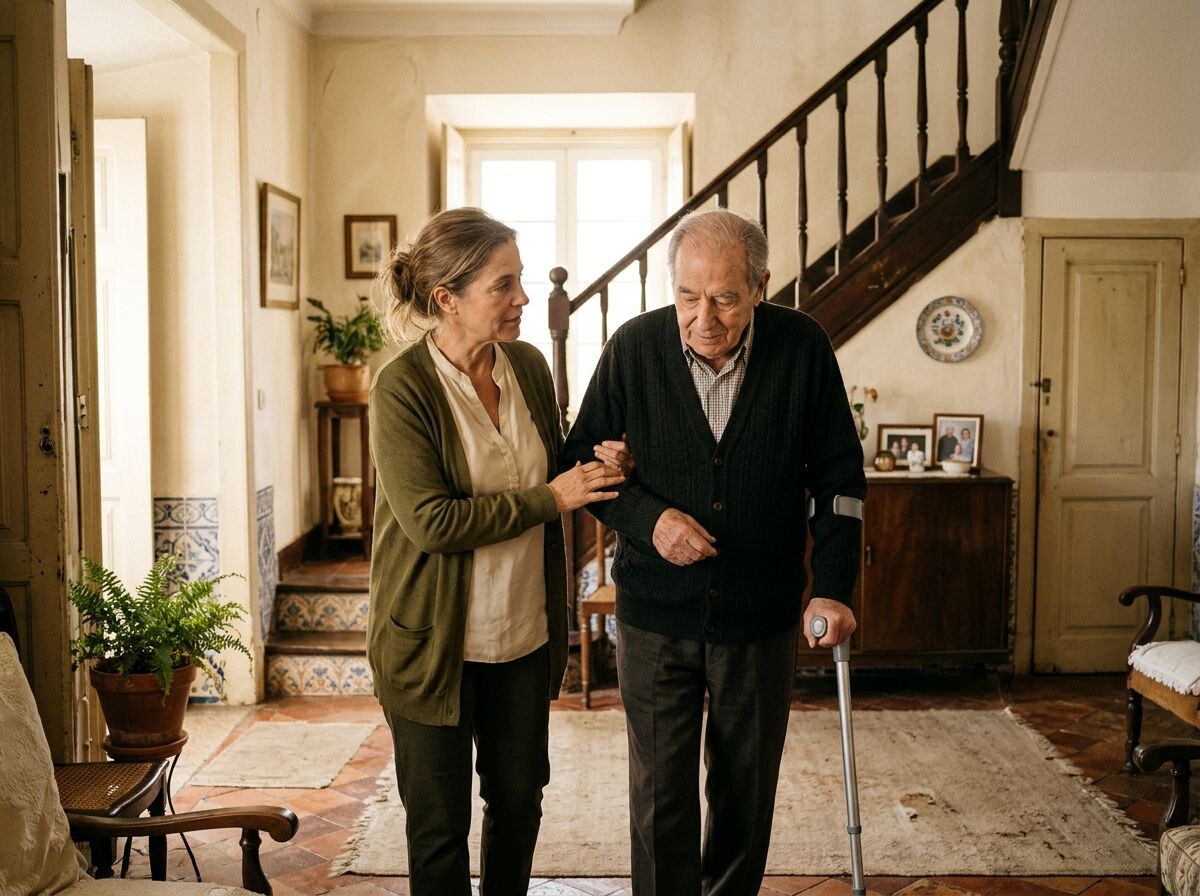
Discharge often comes with a few days’ notice, and the home has stairs. This guide shows what you can ask the hospital, how the National Network of Integrated Continuing Care (RNCCI) works, which routes exist to get support equipment, and which simple arrangements official sources suggest. It also says when a stair lift is a realistic option.
Updated on 3 November 2026. General information; it does not replace the assessment of health professionals or the decision of Social Security. We give no medical advice and we collect no health data.
The essentials
- Talk to the hospital before discharge. In an SNS hospital, the Social Security Institute (ISS) says to contact the ward where the person is admitted or the Discharge Management Team (EGA).
- The RNCCI is not immediate. The local team assesses the proposal and puts the person on a waiting list for a place. People who only need social support fall outside the criteria.
- Support equipment has several routes: the SAPA (prescription before purchase), some council equipment loan banks, and buying it yourself.
- Arrangements without equipment (light, rugs, handrail, markings on the steps) appear in official fall-prevention guides. Moving the bed or the bathroom to another floor does not appear in any we read.
- A stair lift takes time. We found no official installation time. Ask for the date in writing.
The first days: what to ask the hospital
According to the ISS practical guide to the RNCCI, the hospital team checks whether there are clinical and social criteria and sends the proposal to the Local Coordinating Team (ECL) for the area of residence. The ACSS adds that the EGA confirms the information up to the moment of discharge.
We found no official page describing what a “discharge plan” must contain. Ask directly and write down the answers:
- Will the person need help on the stairs? Who can assess this before discharge (physiotherapist or occupational therapist)?
- Is there a proposal for the RNCCI? For which type of service and when?
- What equipment is recommended for the first days, and where is it requested or borrowed?
- Who is the contact at the hospital’s social service?
The SNS 24 line (808 24 24 24) is also listed on gov.pt.
The RNCCI in brief
The ISS describes the network as a group of public and private units providing health care and social support to people in a situation of dependency. The services are:
| Service | Duration given in the guide |
|---|---|
| Convalescence Unit | stay of up to 30 days |
| Medium-Term and Rehabilitation Unit | between 30 and 90 days |
| Long-Term and Maintenance Unit | more than 90 days |
| Integrated Continuing Care Team (ECCI) | support at home, no stay |
The home team serves people who cannot move about independently and whose home meets the conditions for receiving care. Among those not admitted are people in an acute phase of illness or with an exclusive need for social support.
Costs. Health care is the responsibility of the Ministry of Health. Social support is paid by the user, with a Social Security contribution depending on household income (Form CCI 1). If the person is not in hospital, the ISS says to contact the doctor, nurse or social worker at the health centre, who makes the proposal to the ECL.
Support equipment: what exists
- SAPA. The prescription comes before the purchase. The guide who pays for a stair lift explains the process; we do not repeat it.
- Local equipment loan banks. Some councils lend wheelchairs, walkers, crutches or adjustable beds. The Nelas regulation (Aviso 7828/2023) provides free loans to residents of 12 months or more, in economic need, with a prescription from a health professional. We do not know which other councils have one: ask yours.
- Dependency supplement (complemento por dependência). According to gov.pt, it can be requested by invalidity, old-age and survivors’ pensioners, by recipients of the social inclusion benefit, and by non-pensioners with a disease causing special disability, when they need another person for basic needs. We read no amounts.
- Informal carer. Gov.pt requires, among other conditions, that the person cared for receives this supplement or the third-person assistance allowance. The allowance for the main informal carer requires a monthly reference income of the household below 698.27 euros in 2026. The ISS mentions up to 30 days a year of carer respite, if the intervention plan provides for it.
Temporary arrangements, without equipment
The official guides we read are about preventing falls in older people at home, not post-discharge. They repeat simple points:
- Light: good lighting throughout the home and on the stairs; night lights from the bedroom to the bathroom (DGS, Porto, Azores).
- Rugs: avoid loose ones, especially on stairs; in passage areas, Porto says to remove rugs and carpets.
- Steps: visible markings on the first and last step (DGS and Porto).
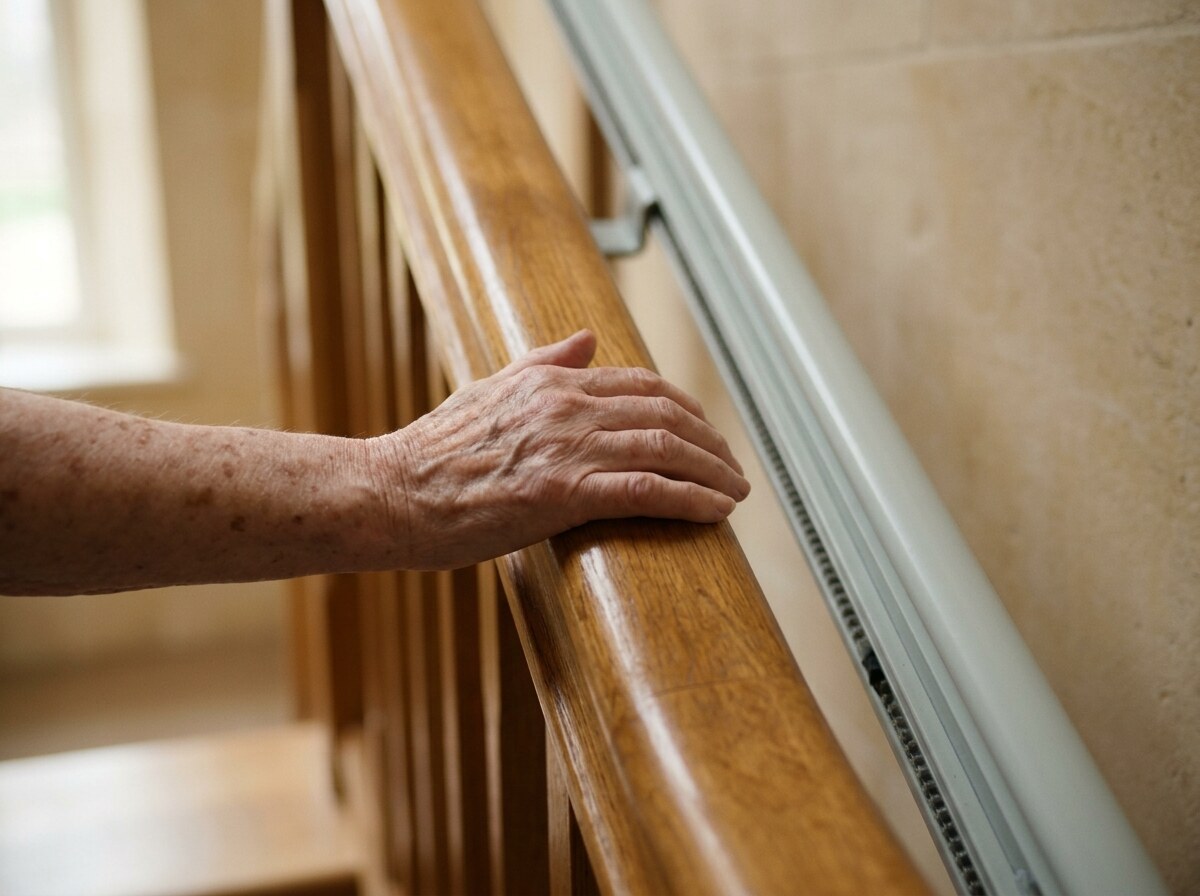
- Handrail: the Azores guide says a handrail on both sides, firmly fixed; Porto, installing one “if necessary”; the DGS says to talk to the doctor about support bars.
- Bedroom and bathroom: switches within reach of someone lying down; bars next to the toilet and shower; never lock the bathroom door.
None says to move the bed or bathroom to the ground floor. If that is possible and safe, the person’s assessor decides.
When a stair lift is realistic
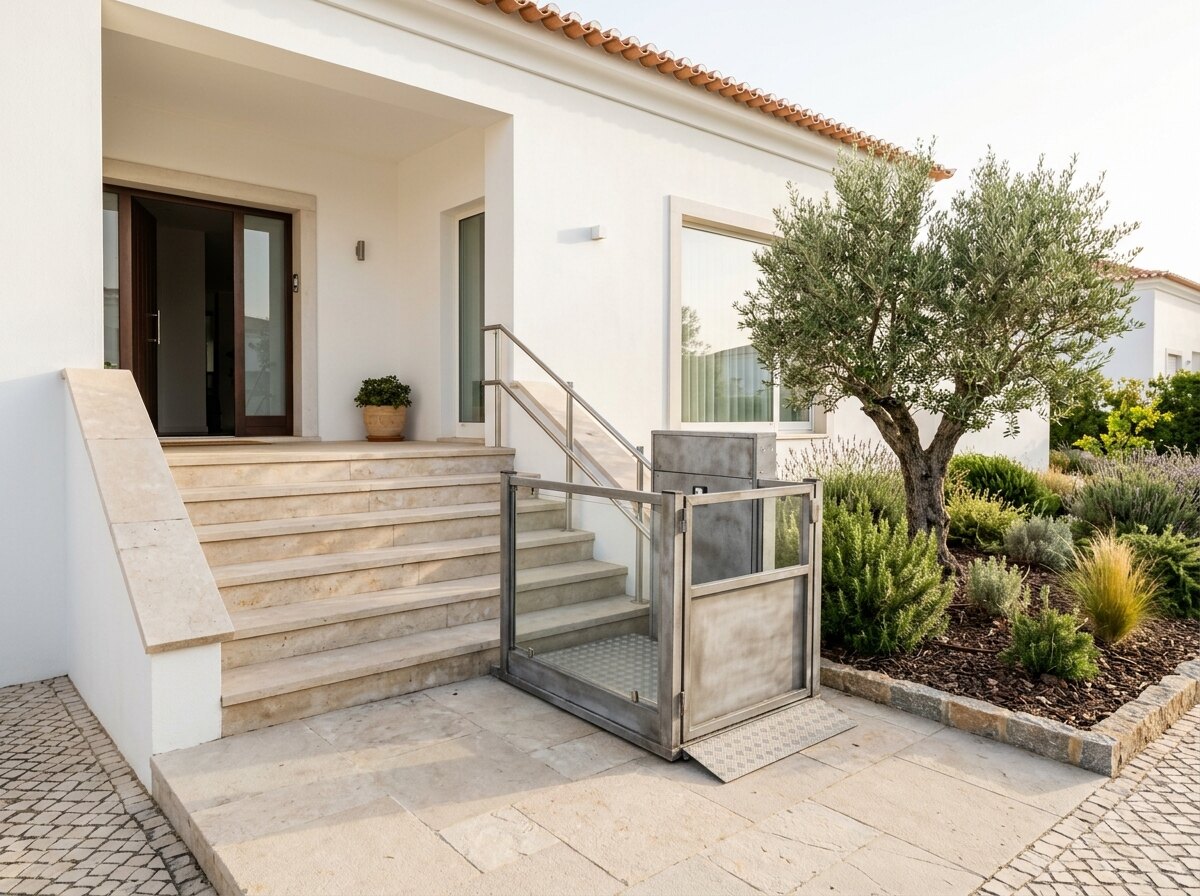
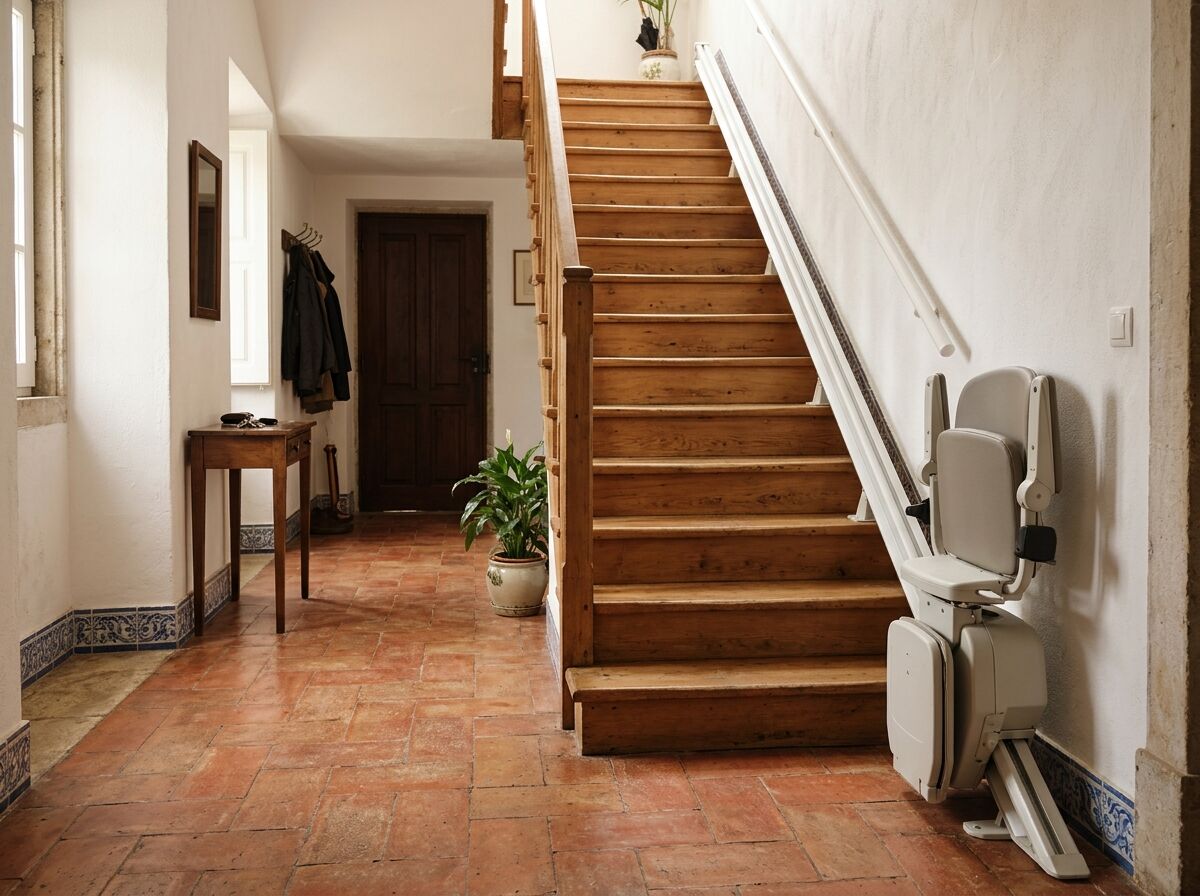
It can make sense if the need is long, and if the staircase allows it. But it is not a solution of days: between measuring, the quote, the decision and the installation, time passes, and we found no official lead time.
- Assessment. Whether the person can use the equipment safely is for the physiotherapist or occupational therapist to say. We do not assess people.
- Measurements. See how to measure stairs for a quote.
- Quotes. Ask for the installation date in writing and compare the quotes.
- Apartment-building stairs. See what the condominium requires.
- Type of equipment. Use the selection tool, which asks for no health data, and the guide stair lift or platform.
What we could not confirm
- Lead times of the RNCCI (from proposal to place) and of installing a stair lift.
- Places and home teams in your area. The ACSS publishes the list of units, which we did not analyse.
- Whether the SAPA requires the 60% incapacity certificate. Gov.pt says yes; the IDiPD FAQ, read in the other guide, says no. Confirm with the prescribing centre.
- The content of the discharge plan, the current amounts of the dependency supplement and the full rules of the informal carer status.
- Other councils with an equipment loan bank: we only read Nelas.
Sources (read on 3 November 2026)
- ISS, Practical Guide to the RNCCI (N37, v4.25, 27-02-2025), sections A, D, F, G, H, I, K: https://sisscontent.seg-social.pt/documents/10152/27187/N37_rede_nacional_cuidados_continuados_integrados_rncci/f2a042b4-d64f-44e8-8b68-b691c7b5010a
- ACSS, continuing care (referral and EGA): https://www.acss.min-saude.pt/category/cuidados-de-saude/continuados/?lang=pt
- gov.pt, Access to health care for people with disabling diseases (23/10/2026): https://www.gov.pt/guias/acesso-a-cuidados-de-saude-para-pessoas-com-doencas-incapacitantes
- gov.pt, Support in case of dependency (25/09/2026; the footer shows another date): https://www.gov.pt/guias/apoio-a-familia/apoio-em-caso-de-dependencia
- gov.pt, Informal carer (26/10/2026): https://www.gov.pt/guias/apoio-a-familia/cuidador-informal
- gov.pt, Practical guide for the informal carer (12/06/2026), SNS 24 contact: https://www.gov.pt/guias/guia-pratico-do-cuidador-informal
- Municipality of Nelas, Aviso 7828/2023, DR 2nd series, no. 75, 17-04-2023, articles 2, 6, 7 and 9: https://www.cm-nelas.pt/download/136/regulamentos-municipais/33168/regulamento-banco-local-de-ajudas-tecnicas.pdf
- DGS, Preventing domestic accidents with older people (undated; 2005 data): https://www.dgs.pt/documentos-e-publicacoes/prevencao-dos-acidentes-domesticos-com-pessoas-idosas-pdf.aspx
- Porto City Council, Guide to Preventing the Risk of Accidents and Falls (undated), pp. 11 and 15: https://acaosocial.cm-porto.pt/files/uploads/cms/GuiadePrevençãodoRiscodeAcidenteseQuedas.pdf
- Azores Regional Network of Integrated Continuing Care, Carer’s Manual, Preventing falls in older people at home (SNS, 2017): https://biblioteca.sns.gov.pt/wp-content/uploads/2017/06/Envelh_ativo_manual-cuidador-prevenção-quedas.pdf
- SAPA (Despacho 11077/2025) and IDiPD FAQ: cited through the guide on support, not re-read here.
Questions and answers
The ISS says to contact the ward where the person is admitted or the Discharge Management Team (EGA), which assesses whether there are criteria to propose the person to the RNCCI. Source: RNCCI practical guide, section H.
Not necessarily. The Local Coordinating Team assesses the proposal and puts the person on the waiting list for a place. We found no official lead times. Source: RNCCI practical guide, section H.
Some councils have equipment loan banks, for example Nelas (Aviso 7828/2023), with their own requirements. Ask your council whether there is one.
We found no official lead time. Ask for the installation date in writing in every quote and confirm whether it depends on a prior prescription.